Winter Birdwatching in the UK: Where to Find Herons and Waterfowl
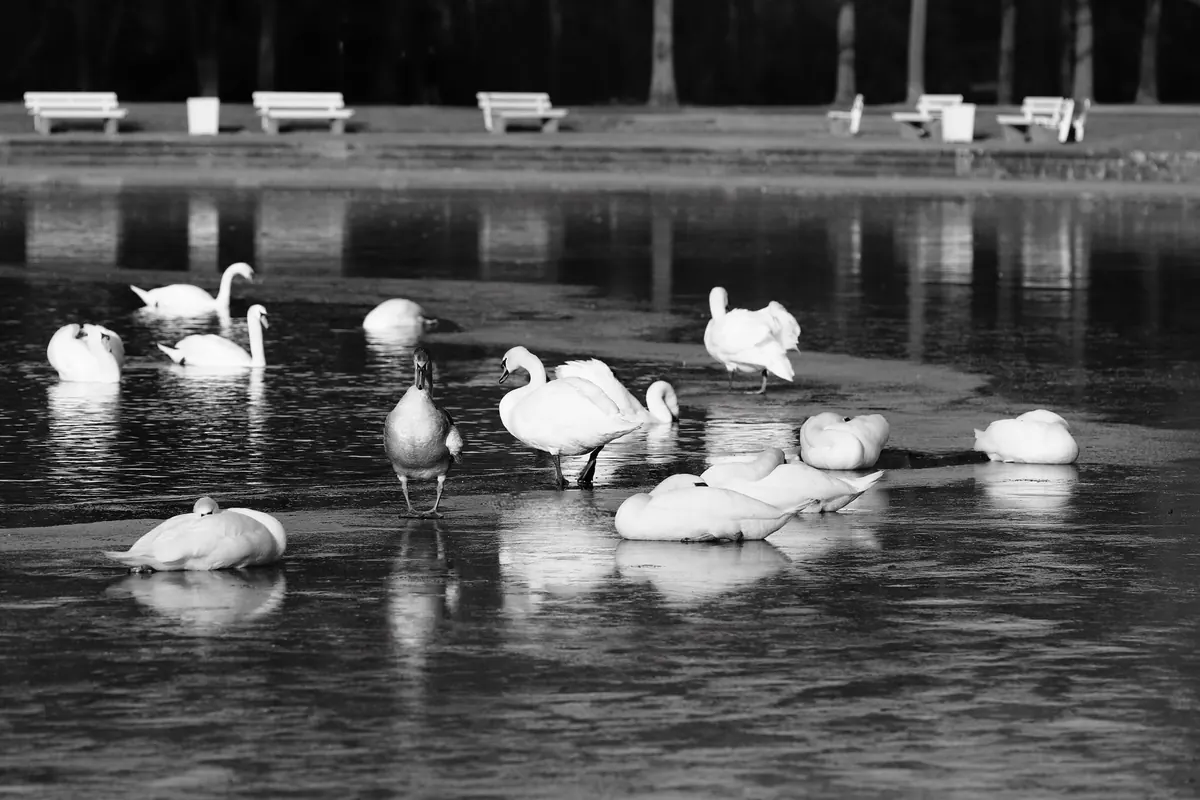
Winter strips a wetland back to essentials: open water, ice and the birds that depend on both. A grey heron that spent autumn stalking the shallows may now stand in one spot for twenty minutes without moving, hunched against a wind that has numbed your fingers. Get the timing right and the same morning offers herons, a raft of ducks in their smartest plumage and, with patience, a bittern lifting clear of the reeds.
Winter turns a wetland into a gathering place
Cold weather does a lot of the work for you. Frost across the Continent pushes ducks, geese and swans westwards, and British wetlands absorb them; wildfowl numbers build through November and peak between Christmas and February. Grey herons are with us all year, but our residents are joined by birds from Scandinavia and the Low Countries, so the heron on your local lake in January may not be the one you watched in July.
Better still, winter thins the vegetation and strips the trees. Birds that would be invisible in June sit in plain view, and ice squeezes them onto fewer patches of open water. Less water, more birds, better views.
How grey herons survive the cold
Herons ration themselves through hard weather rather than fighting it. In a freeze they switch from active stalking to standing and waiting, conserving energy while fish, sluggish in near-zero water, become easier prey. You will see the classic postures: one leg tucked, neck compressed, feathers fluffed into a loose grey shawl, the bird turned so its back takes the wind.
Look for them where water stays open — outfalls, springs, weirs, the churned pool below a sluice, and the ice-free edge of a lake where ducks keep the surface moving. A heron standing on the ice, staring at a crack of black water, is a familiar winter sight. In a long frost they will take voles, amphibians and small fish, and from January they drift back to their nesting trees, bill-snapping and croaking in what passes for courtship. Some pairs lay in February.
Finding and watching a winter roost
Herons are sociable at night in a way they rarely are by day. Outside the breeding season they gather in communal roosts, usually in tall trees, and in hard weather they drop lower and closer to water, on islands and in reedbeds. Little egrets sometimes join them, and great white egrets increasingly do.
The best time is the last forty minutes of daylight. Herons fly with slow wingbeats, neck folded into a shallow S and legs trailing, calling a harsh, carrying kraaank as they come in. Arrive early, watch the flightlines, and you can trace birds back to a roost you never knew existed.
Roost etiquette
A roost is where birds stay warm through the coldest hours, so give it room. Stay on public paths, keep voices low and leave the torch off. Never use playback near a roost. If birds flush repeatedly, you are too close; retreat and watch from further away.
Winter waterfowl: what you are looking at
A big flock can be daunting. Work through it slowly and the species sort themselves out.
- Dabbling ducks — wigeon whistling on flooded grassland, teal in tight, frantic groups, shoveler sweeping their bills, plus pintail, gadwall and mallard.
- Diving ducks — goldeneye, tufted duck, pochard and scaup on deeper water; smew, the small white-and-grey sawbill, on reservoirs during cold snaps.
- Sawbills — goosander and red-breasted merganser, chasing fish in rivers and estuaries.
- Swans — whoopers arriving from Iceland, the now scarce Bewick's on a handful of traditional sites, and resident mute swans.
- Geese — brent on estuaries, barnacle and pink-footed on coastal grassland, greylag and Canada geese almost anywhere.
- The supporting cast — coot, great crested and little grebes, cormorant, and marsh harriers working the reed edge.
Scan methodically rather than staring. Pick a landmark on the far shore, sweep left to right, and look for the odd bird out: different shape, size or colour. A scope earns its keep.
Fieldcraft for a frosty morning
- Go early. Flocks leave their roosts within the first hour of daylight and return at dusk; midday is often quiet.
- Choose the cold. A hard frost or a sustained easterly concentrates birds onto unfrozen water, which is when scarcer diving ducks appear on local reservoirs.
- Watch the wind. Birds shelter on the leeward shore, and wind pushes floating ice into rafts, opening feeding water on one side of a lake.
- Check the tide. On estuaries a rising tide pushes ducks and waders off the mudflats into creeks and pools near the bank.
- Look at field edges too. Flooded pasture and wet stubble hold wigeon, lapwing and golden plover that you will never see from a hide.
- Keep records. Counts from the same spot each month teach you more than any single visit.
Wetlands worth planning around
WWT reserves lead the way in winter: Slimbridge for Bewick's swans and white-fronted geese, Welney on the Ouse Washes for its evening swan feeds, Martin Mere for whoopers and pink-footed geese, and Caerlaverock for the Svalbard barnacle geese. Among RSPB reserves, Minsmere, Strumpshaw Fen and Leighton Moss are reliable for bitterns and marsh harriers in the coldest weeks, while Rutland Water and Abberton Reservoir come into their own for diving ducks.
Do not overlook small sites. A park lake with a few unfrozen square metres can hold a goosander after a cold snap, and a river outfall is often the best heron fishing spot for miles.
Before you go
Winter birding is comfortable if you plan for discomfort: layers rather than one thick coat, waterproof boots with grip, gloves you can pull off easily, and a flask. Condensation will fog your optics, so carry a cloth and let your binoculars warm up gradually when you come in. Check reserve opening times before travelling, as some hides and paths close in winter to limit disturbance, and check tide tables for estuary visits. Never walk out onto tidal mud.
Standing still in the cold is harder on the body than a brisk walk, so take breaks and know when to head home. If you have a heart or lung condition, or take medication that affects circulation, it is worth a word with your GP before a long, cold morning. And when you find a heron at the ice edge doing nothing at all, give it ten minutes. It usually repays the wait.
Photo: Christina & Peter / Pexels