A Wetland Reserve Day Checklist: What to Pack and Prepare
A wetland reserve rewards preparation more than almost any other kind of birdwatching. The birds are often distant, the ground is frequently soft, and the best light and the biggest tides do not always arrive at convenient times. Turn up at the wrong hour with the wrong footwear and you will spend more time watching your step than watching waders.
None of this requires heroic effort. A little planning the night before, a bag packed with intent, and a basic understanding of how water and weather behave will carry you through most days on a marsh, estuary or reedbed. Here is what to think about, roughly in the order you will need to think about it.
Check the Tide Before You Check Anything Else
On a coastal wetland, the tide is the day's script. High water pushes waders, ducks and geese off the mudflats and into the roosts and lagoons nearest the hides. Low water spreads them across enormous areas of exposed mud, where they feed at a distance and often disappear into the haze. Two visits to the same reserve on the same day can feel like two entirely different places.
Look up the tide table for the nearest port or estuary the evening before, and work out when you want to be in position. A useful rule is to arrive two hours before high water and stay for two or three hours after, which gives you the rising water's concentration of birds and the first movements as it falls again. Spring tides — the big ones around the new and full moon — push birds closer still, and can also flood paths that are perfectly dry on a neap tide. If a reserve publishes a tide gate or a flooding warning for certain paths, take it seriously.
Estuaries also empty fast. If your plan involves walking out onto mud or a causeway, know when the water turns and give yourself a generous margin. Mudflats that look firm can cut off a return route surprisingly quickly, and a rising tide on flat ground moves faster than most people expect.
Read the Weather, Not Just the Temperature
Wind matters more than warmth on open wetlands. A stiff westerly across a marsh will keep birds hunkered down and make your scope wobble on even a good tripod. A light northerly after a cold night can bring a genuine arrival of wildfowl. Check the wind direction and speed, and consider which hides face into it — sometimes the difference between a quiet morning and a busy one is simply choosing the sheltered side of the reserve.
Rain is rarely a reason to cancel, but it changes what you carry. Steady drizzle reduces visibility across a lagoon, so plan shorter distances between hides. Heavy rain can raise water levels on inland reserves and flood boardwalks. Mist is the trickiest of all: it can burn off by mid-morning and give you a superb couple of hours, or it can sit there until dusk. If visibility is poor, concentrate on the nearest pools and the reeds at your feet rather than straining for the far bank.
Footwear and Clothing: Get This Right and Everything Else Follows
Wetland reserves are wet. That is rather the point of them. The single most common mistake on a first visit is treating a boardwalk-and-hide reserve as a dry walk.
- Wellies or waterproof boots for anything with mud, marsh or shallow flooding. Ankle-high walking boots are fine on dry gravel paths and hopeless on a soft margin.
- Spare socks in a dry bag. Cheap insurance, and you will be grateful if water tops your boot at a sluice or a stepping stone.
- Layers rather than one thick coat. A hide can be warm and still; a sea wall in February is neither. A base layer, a fleece and a windproof shell cover almost everything.
- A waterproof outer layer with a hood. Umbrellas and binoculars are a poor combination in wind.
- Gloves you can use. Thin ones that let you focus a scope beat thick ones you have to remove every few minutes.
- A hat. Sun in summer, warmth in winter, and something to shield your eyes from glare off the water all year.
Avoid bright whites and block colours if you can; muted greens, browns and greys blend into reeds and shingle and disturb birds less when you are walking between hides.
Optics: Binoculars, Scope and the Bits That Get Forgotten
Binoculars are the essential tool, and for most wetland days they will do the bulk of the work. Something in the 8x42 range is a sensible all-rounder: bright enough in dull conditions, wide enough to follow a flying flock.
A spotting scope turns a distant lagoon into a usable one. On a big estuary it is close to indispensable, because many of the best birds will be several hundred metres away and identifiable only at 30x or more. If you do not own one, borrow before you buy, or hire for a day where that is offered — the choice between an angled and a straight eyepiece is personal, and it is worth trying both standing and sitting before committing.
Do not forget the small things that ruin good views:
- Lens cloth and a small blower — wetland air is damp and full of spray and dust.
- A waterproof cover or at least a plastic bag for the scope in rain.
- Fresh batteries if your optics or headtorch use them.
- A tripod with a decent head; a wobbly scope is worse than no scope.
If You Are Photographing
Salt spray, mud and condensation are the enemies here. A rain cover, a dry cloth and a way of carrying the camera that keeps it off the ground will save you a repair bill. Working from a hide window with a bean bag is often steadier and less obtrusive than a tripod.
Food, Water and the Practical Kit
Wetland reserves are often a long way from the nearest shop, and hides are rarely near the car park. Assume you will be out longer than you planned, because you usually are.
- Water — at least a litre, more in summer. There is little shade on a sea wall.
- A flask. Hot tea or coffee transforms a cold, slow morning.
- Snacks that survive being squashed: nuts, oatcakes, fruit, a sandwich.
- Sun cream and insect repellent in the warmer months. Mosquitoes and midges near reedbeds are not a myth.
- A torch or headtorch, especially if you are staying for a dusk roost or arriving for dawn.
- Tissues, hand gel and a small bag for your own litter.
- Cash or a card for any car park or visitor centre charges, and a note of the reserve's closing times.
If you have mobility needs, check access before travelling: many reserves have hides reachable by wheelchair-friendly boardwalks, but others rely on uneven steps and stiles. A quick look at the reserve's own access page saves a disappointing journey.
A Short Notebook, or an App
Write down what you see, where and when. The value is not in the record itself but in the pattern it reveals after a season: which pool holds birds on a falling tide, which hedge the yellowhammers use, how early the first returning wigeon appear. A small waterproof notebook and pencil is the simplest option. A phone app works well too, but keep an offline map or printed reserve plan, as signal on remote marshes is unreliable.
Before You Leave the House
Run through it once, out loud if it helps. Tides checked against the reserve's nearest port. Wind direction and rain forecast noted. Boots by the door with spare socks inside them. Binoculars, scope, tripod and cloths in the bag. Water, flask, food. Layers, waterproof, hat, gloves. Torch. Reserve opening times and parking sorted.
Then go, and give yourself permission to sit still. The best wetland birding rarely happens while you are walking between hides. It happens when you settle in, let the marsh return to its own rhythm, and wait for the water to move the birds towards you.
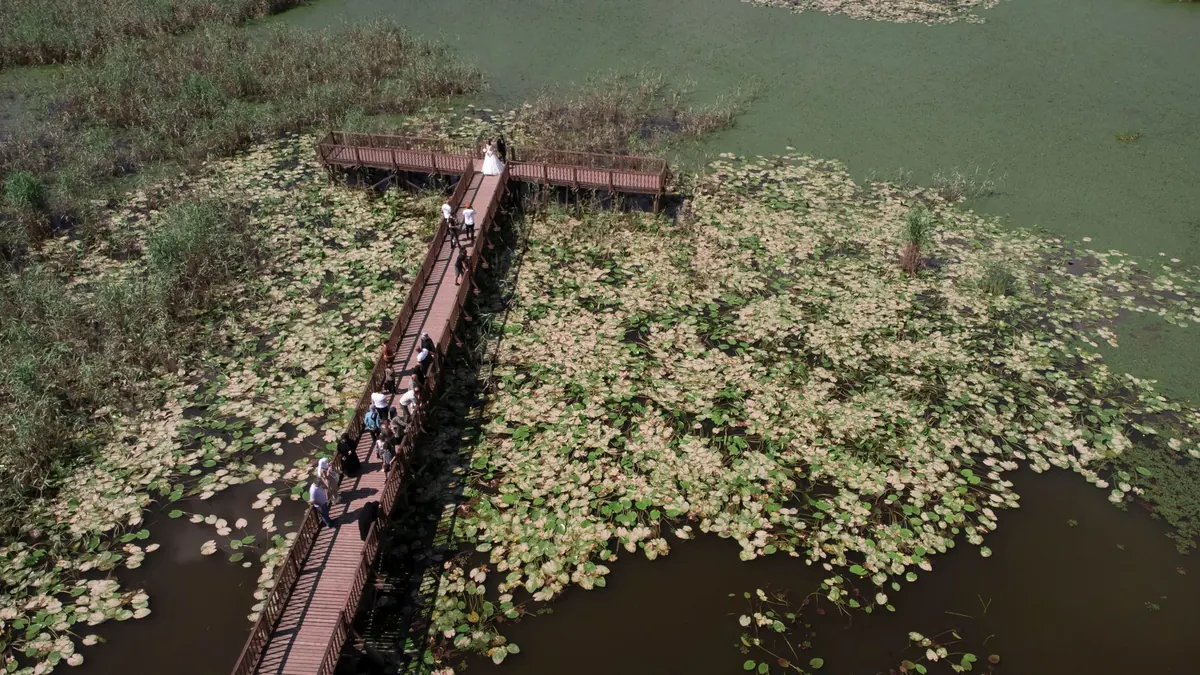
Photo: Kenan Turguç / Pexels